
The Look of Stone. The Strength of Concrete. One Continuous Pour.
Stamped concrete patios, pool decks, and walkways across Central New York. We tear out rotted decks and tired slabs and pour something with real character in their place.
That Surface Is Not Getting Better On Its Own
Wood decks and plain concrete have a rough life in Central New York. Lake effect snow sits on them for months, spring melt soaks into every seam, and summer sun bakes out whatever protection was left. Sooner or later, you end up here:
Splinters and Soft Spots
Boards that give a little when you step, gray splintered spots where kids run barefoot, and screws that back themselves out every season.
Cracked, Heaving Slabs
Old concrete poured on a thin base cracks, tilts, and pools water. Every winter, freeze-thaw cycles pry those cracks a little wider.
The Endless Upkeep Loop
Sand, stain, seal, repeat. A wood deck asks for a weekend of work every year and still fades, warps, and rots on schedule.
A Gray Slab of Nothing
Plain broom finished concrete does the job and adds zero character. Your backyard deserves better than a parking pad.
One Pour. A Whole New Backyard.
We handle the entire transformation from teardown to final sealer, so the rotted deck leaves on our trailer and a finished stamped concrete patio takes its place. No juggling a demo crew, an excavator, and a concrete contractor. One team, one schedule, one result.
- Full demolition and haul away of the old deck or broken slab
- Excavation, grading, and a properly compacted gravel base
- Air-entrained concrete mixed for Central New York winters
- Your choice of stamp pattern and integral color
- Control joints placed where the slab wants to move
- Penetrating sealer to lock out water and road salt
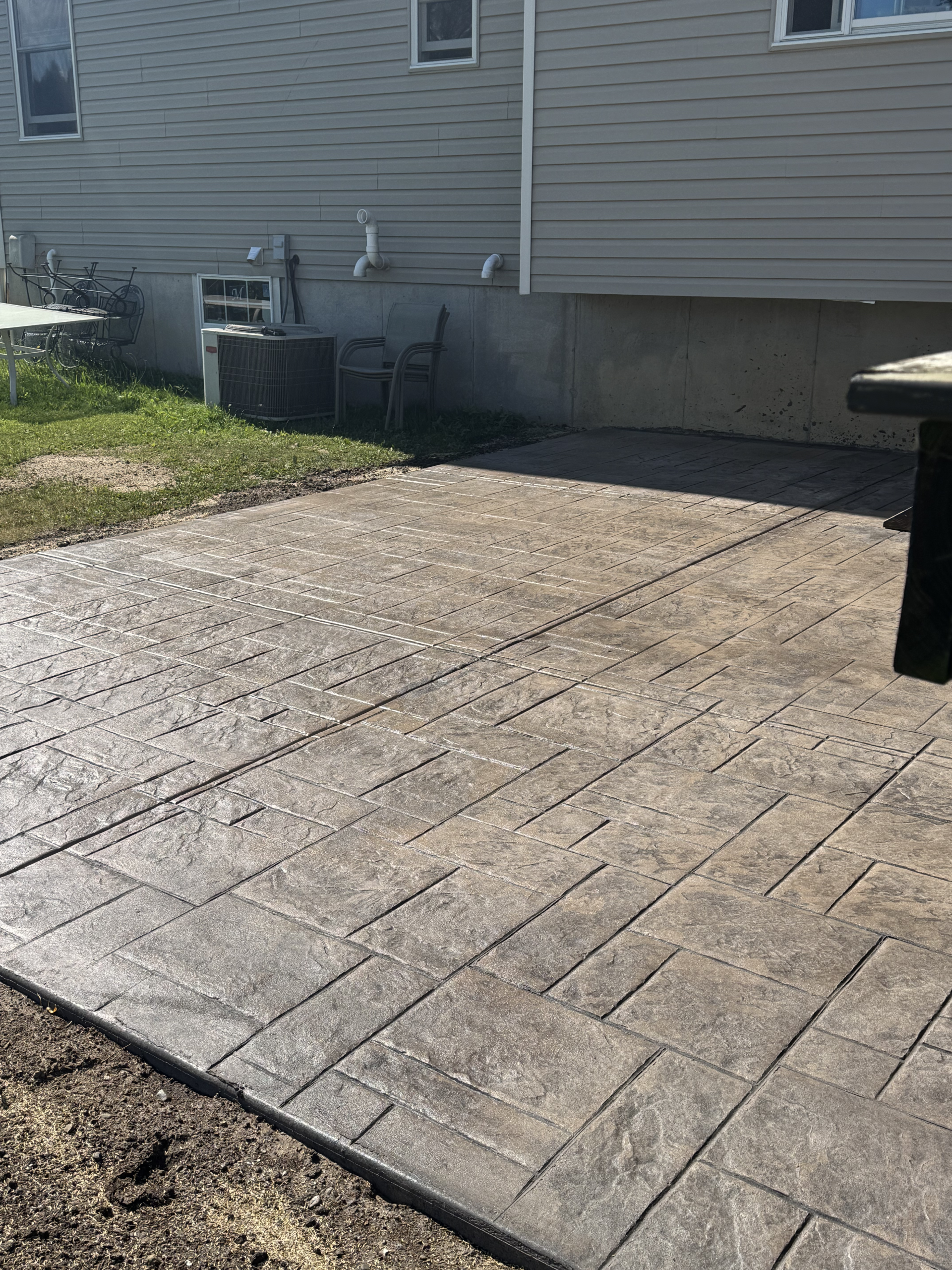
The Look of Stone or Wood, in One Continuous Surface
Stamped concrete is poured as a single slab, then textured and colored while it cures. You get the character of natural materials with no joints for weeds, no gaps for ants, and no boards to replace.
Stamped Concrete Across Onondaga and Oswego Counties
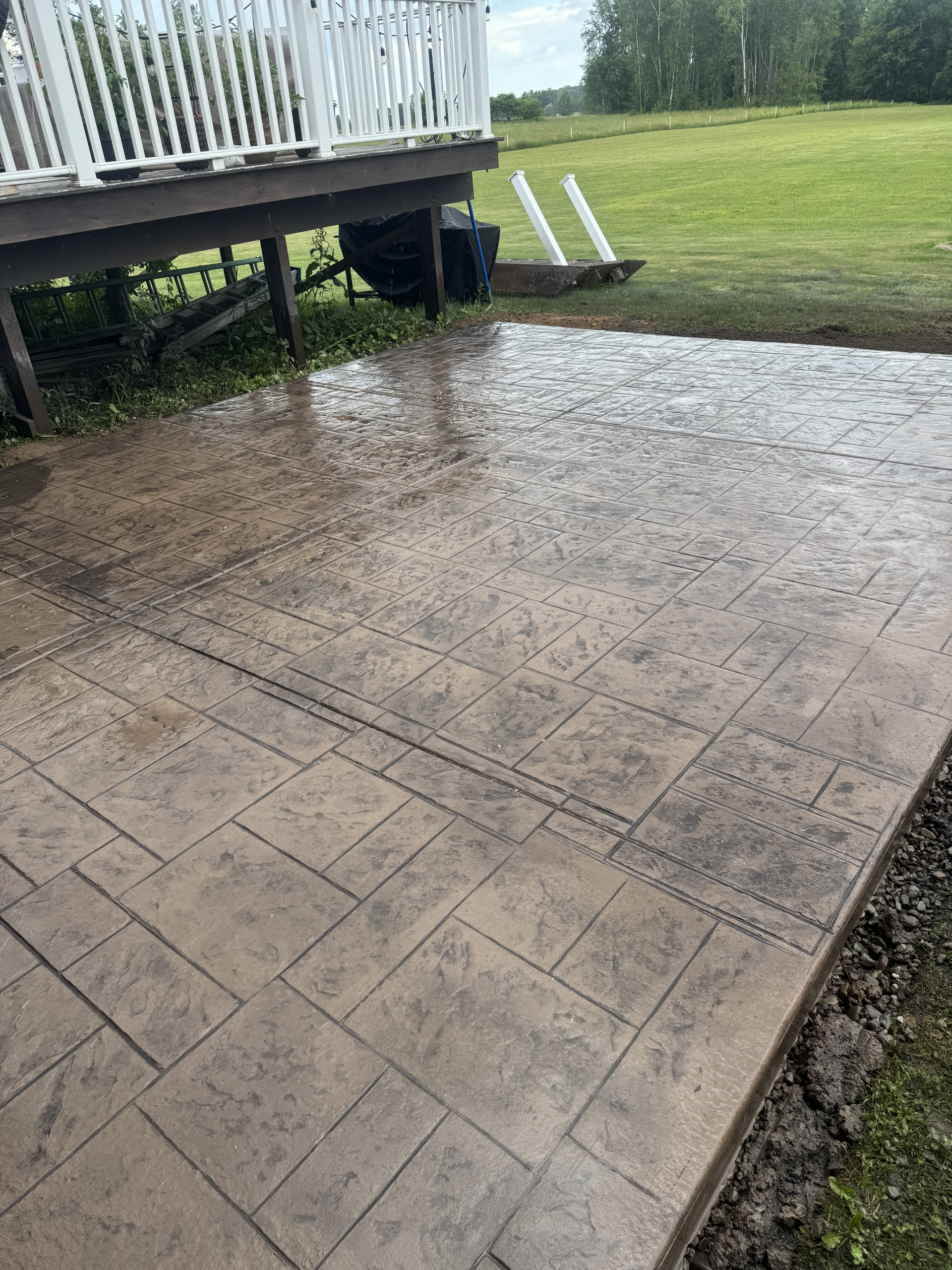
Why Stamped Concrete Makes Sense in Central New York
Between Lake Ontario snow, Oneida Lake humidity, and dozens of freeze-thaw swings every winter, this region punishes outdoor surfaces. Stamped concrete holds up here because of what happens before and during the pour, not just after it.
Freeze-Thaw Ready
We pour air-entrained concrete, which gives freezing water microscopic room to expand inside the slab instead of cracking it apart.
A Real Base Underneath
Most slab failures start below the slab. We excavate, grade, and compact a proper gravel base so water drains instead of heaving your patio.
Sealed Against Salt
A penetrating sealer locks out snowmelt and the road salt that gets tracked in all winter, protecting both the color and the surface.
Texture You Can Trust
The stamped surface adds grip underfoot, a real benefit around pools and on entry walkways when everything is wet or icy.
Nowhere for Weeds
One continuous surface means no joints for weeds to colonize, no gaps for ants to tunnel, and no sand to top up. Rinse it and get on with your summer.
Decades, Not Seasons
A properly built stamped patio serves for decades with a fresh coat of sealer every few years. A wood deck starts declining the day it is finished.
Wood Deck vs. Plain Slab vs. Stamped Concrete
| Wood Deck | Plain Concrete Slab | Stamped Concrete | |
|---|---|---|---|
| Look and character | Warm at first, fades and grays fast | Functional but flat and plain | Stone, brick, or wood plank texture with rich color |
| Yearly upkeep | Sanding, staining, sealing, board swaps | Occasional cleaning | Sweep, rinse, reseal every few years |
| Winter performance | Absorbs moisture, rots, and gets slick | Depends heavily on base and mix quality | Air-entrained mix and compacted base built for freeze-thaw |
| Barefoot friendly | Splinters and popped nail heads | Fine, but broom finish can be rough | Smooth textured surface with added grip |
| Weeds and pests | Gaps invite both | Cracks become weed lines | One continuous surface with nowhere to take root |
| Curb appeal impression | Reads as aging and high effort | Reads as basic | Reads as a custom, finished outdoor space |
What Your Neighbors Say About Working With Us
A stamped patio is a one time decision you live with for decades, so pick the crew by their track record.
From Rotted Deck to Finished Patio in Four Steps
Reach Out
Call, email, or use our contact form. Tell us what you are working with, whether it is a failing deck, a broken slab, or a bare yard.
Site Visit
We walk the property with you, check grading and drainage, and talk through patterns, colors, and layout options that fit your space.
Clear Proposal
You get a written proposal covering scope, materials, timeline, and cost. No surprises and no pressure while you decide.
We Build It
Demo, excavation, base, pour, stamp, and seal. You watch the old deck leave and a finished patio take its place.
Stamped Concrete, Answered Plainly
Can you remove my old deck or patio as part of the project?
Yes, and honestly that is where most of our stamped concrete projects start. Demolition, haul away, excavation, and base prep are all part of the same job, so you deal with one crew from teardown to sealer.
Will stamped concrete crack in our winters?
All concrete moves, which is why we control where it moves. An air-entrained mix, a compacted gravel base, and properly placed control joints direct that movement into planned lines instead of random cracks. That combination is the difference between a slab built for Central New York and one that just got poured here.
Stamped concrete or pavers, which should I pick?
It depends on the project, and since we install both, you get an honest answer. Stamped concrete delivers a continuous decorative surface, wide pattern and color choice, and a friendlier budget for larger areas. Techo-Bloc Grande pavers cost more up front but can be lifted and reset unit by unit if a utility line ever needs work. We walk you through the tradeoffs on your actual site during the visit.
How long does an installation take?
Most residential patios run about a week from demo to final sealer, depending on size, weather, and site conditions. The concrete then needs a few days of cure time before furniture goes back out. We map out the schedule in your proposal so you know what to expect.
What maintenance does it actually need?
Sweep it and rinse it like any patio, then plan on a fresh coat of sealer every few years to keep the color rich and the surface protected. Skip the harsh de-icers in winter and use sand for traction instead. That is the whole list.
Does stamped concrete work around pools?
It is one of the best pool deck surfaces you can pick here. The stamped texture adds grip when the surface is wet, the sealer resists pool chemicals, and there are no boards or joints for bare feet to catch on. We build it pitched away from the pool so splash water drains properly.
Ready to Retire the Old Deck for Good?
Free, no obligation estimates across Onondaga and Oswego Counties. Tell us about your space and we will show you what a complete stamped concrete transformation looks like.
Veteran Owned // Serving Central New York