
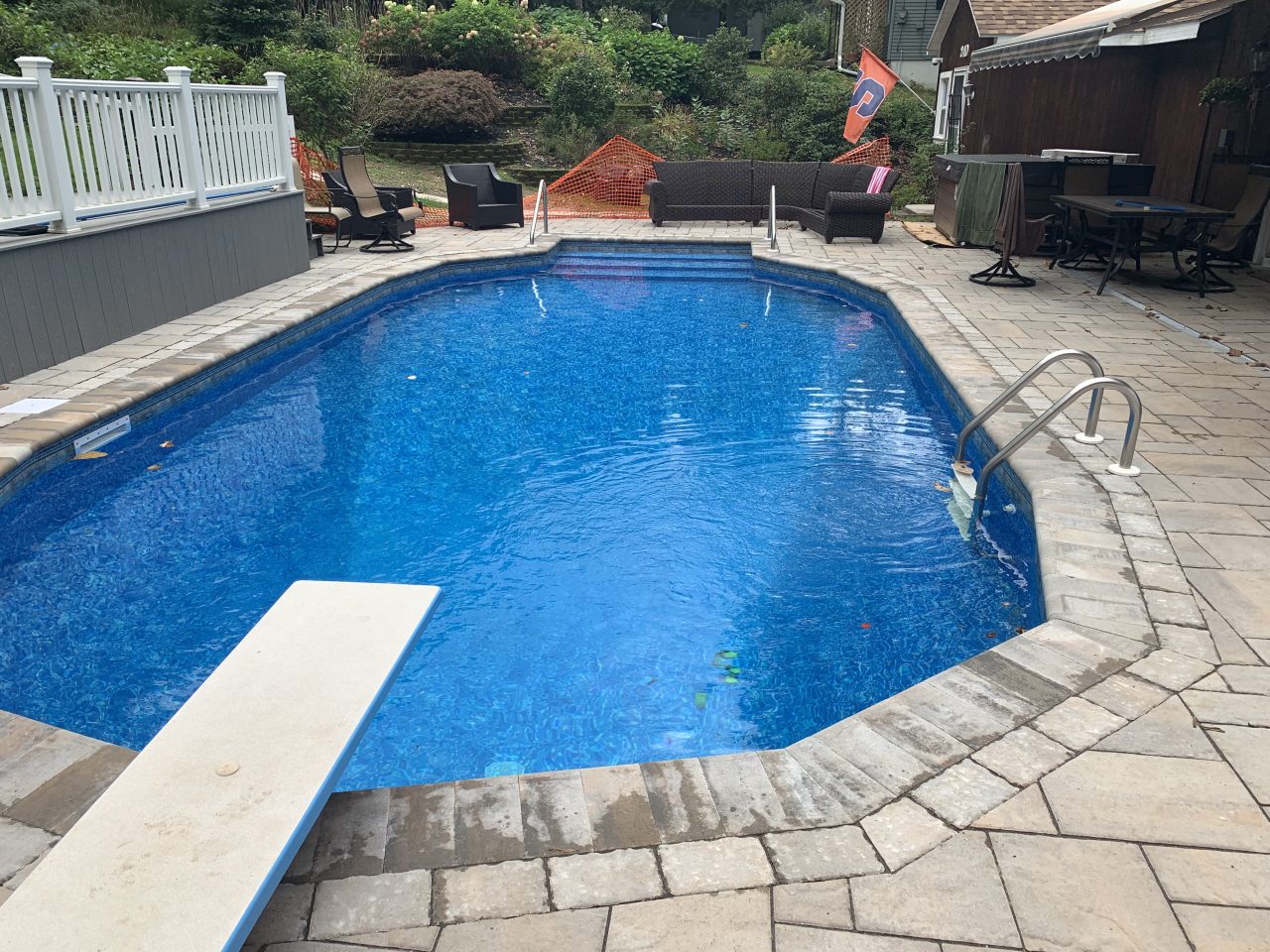
BLUF: If you have a pool in Liverpool, NY, what’s sitting around it matters as much as the pool itself. A slippery, cracking, faded deck is a safety problem and an eyesore. Concrete pavers fix both — and they hold up through Central New York winters better than any other material on the market.
The Pool Deck Nobody Talks About — Until Something Goes Wrong
I’ve seen it a dozen times. A homeowner spends real money installing a pool, only to have the deck around it treated like an afterthought. Poured concrete gets thrown down fast and cheap, and three winters later it’s heaving, cracking, and turning into a trip hazard every time someone walks out to swim.
That’s when we get the call.
At Ground Force Property Services, pool deck work is something we take seriously from the start — because the surface around your pool isn’t just decorative. It’s where your kids run barefoot. It’s where water is constantly tracked and splashed. It’s where you’re sitting in direct sun for hours. The material you choose has real consequences, and we help Liverpool homeowners make the right call.
Why the Material You Choose Is Everything
Poured Concrete — The Most Common, and the Most Problematic
Poured concrete is what most builders default to because it’s fast and cheap to install. The problem is that it doesn’t handle freeze-thaw cycles well — and around Liverpool, those cycles happen all winter long. Water gets into small surface cracks, freezes, expands, and widens those cracks. By year five you’ve got a surface that looks fifteen years old.
And when poured concrete gets wet, it gets slippery. Around a pool, that’s not just annoying — it’s a genuine hazard.
Wood and Composite Decking — Not Built for Ground Contact
Some homeowners want a warmer, natural look and go with wood or composite decking around the pool. The issue is that ground-contact conditions are brutal on wood over time. Even pressure-treated lumber swells, warps, and develops gaps. Composite holds up better but gets hot in the sun — hot enough to be uncomfortable on bare feet — and still needs regular maintenance to stay looking decent.
Concrete Pavers — Built for This
Concrete pavers are the material that actually makes sense for a pool deck in Central New York. Here’s what sets them apart:
- They’re textured. Every concrete paver has a surface finish that provides grip even when wet. That’s not a feature you add on — it’s built into how they’re made.
- They move with the ground. Instead of cracking under freeze-thaw pressure, individual pavers shift slightly and settle back. The deck stays intact year after year.
- They stay cooler underfoot. Concrete pavers absorb less heat than solid poured slabs, which means walking from the pool to a lounge chair doesn’t feel like crossing hot coals.
- They’re repairable without tearing everything out. If one paver ever does get damaged, we pull that single piece and replace it. No jackhammer, no full demo.
What a Pool Deck Project Looks Like With Us
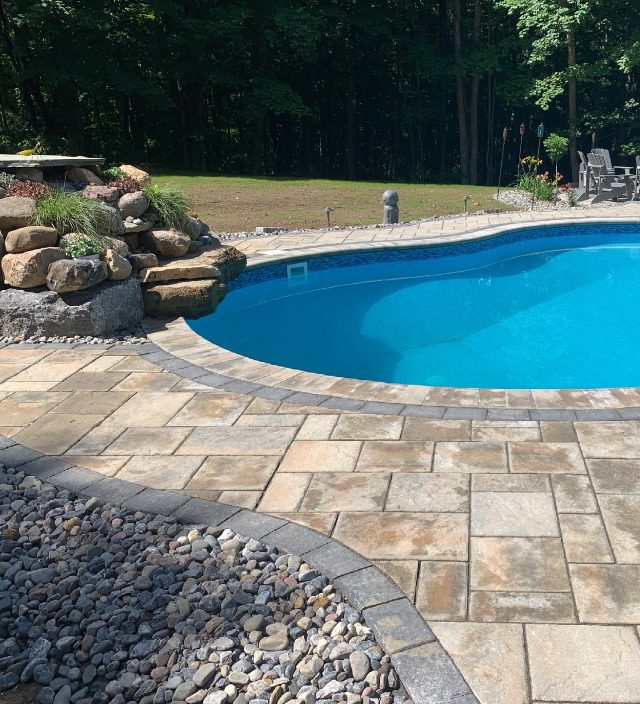
We don’t treat pool decks like a standard flatwork job. The area around a pool has specific demands — drainage, non-slip surface, proximity to water — and our installation reflects that.
Step-by-Step: How We Build a Pool Deck
- We assess the area around the pool — slope, drainage direction, and whether any existing surface needs to be removed first.
- We excavate to the correct depth and establish proper slope away from the pool so water drains off the deck instead of pooling on it.
- We bring in and compact a gravel base layer that supports the pavers and keeps the surface stable through ground movement.
- We lay a screeded sand bed, then set the pavers in your chosen pattern, cutting tight along the pool edge and any curves in the deck layout.
- We compact the finished surface and fill all joints with polymeric sand to lock the pavers and resist weed growth between them.
The drainage piece is something we pay close attention to on every pool deck. Water that sits on a deck surface promotes algae, moss, and slip hazards. Getting the slope right from the start keeps the deck draining properly every season.
Coping — Where the Deck Meets the Pool
For inground pools, we also handle coping — the cap pieces that run along the pool edge where the deck meets the water. Good coping finishes the look, protects the pool shell, and gives swimmers a safe edge to grip. We match the coping material and color to the deck pavers so the whole thing reads as one clean, finished space.
Design Options for Liverpool Pool Decks
We work with homeowners on layout and style before any equipment shows up. A pool deck should look like it was planned, not pieced together. Here’s what we typically design around:
- Full surround decks — pavers run all the way around the pool for a clean, uniform look and maximum usable space.
- Partial decks with grass panels — leaving sections of lawn between paved areas gives a more open, resort-style feel and reduces total paver cost.
- Built-in sun shelves and seating walls — we can incorporate low bench walls or raised planter borders directly into the deck for a finished look without extra furniture.
- Integrated walkways — we extend the deck material out to the yard, back door, or gate so there’s a connected path instead of stepping off the deck onto bare ground.
On color and texture: we bring samples to your property. What looks good in a photo doesn’t always look right next to your specific pool finish, fence color, or home exterior. We’d rather show you the actual material in your actual space before anything gets ordered.
Honest Answers to Questions Liverpool Homeowners Ask Us
“Our current deck is cracked and uneven. Do we have to tear it all out first?”
Usually, yes — if there’s an existing poured concrete slab, we remove it before installing pavers. Installing pavers on top of a cracked, unstable base just transfers the problem upward. Starting fresh with a proper gravel base is how you get a deck that actually lasts.
“How do we keep pavers from staining around the pool?”
Chlorine splash, sunscreen, and algae are the main culprits around pools. A penetrating concrete sealer applied after installation gives the pavers a protective layer that makes cleaning much easier. We recommend sealing every two to three years to keep the surface in good shape and the colors looking sharp.
“What about the edges near the pool water — won’t pavers shift into the pool?”
We install a solid edge restraint along the pool perimeter that holds the paver field in place. The restraints are set below the surface so they’re invisible once the job is done. Nothing shifts into the pool.
“How long does a pool deck installation take?”
For a standard residential pool surround, most jobs run two to four days depending on size, any demo required, and weather. We build out a realistic schedule before we start and keep you updated if anything changes.
Talk to Ground Force Before Next Pool Season
If your pool deck is already a problem — or if you’re putting in a new pool and want the surround done right from the start — we’re the crew to call. We work across Liverpool and throughout Onondaga and Oswego Counties, and our estimates are always free with no pressure attached.
Come pool season, you’ll want the deck ready. Getting on our schedule now means you’re not scrambling in May.
Give Ground Force Property Services, LLC a call at 315-461-7747, or schedule your free consultation.